Introduction
Choosing the right hiring model is one of the most important decisions for business growth. Companies today need flexible workforce strategies that allow them to access skilled professionals while managing costs and adapting to changing business requirements.
Permanent hiring and contract staffing are two popular recruitment approaches. While permanent employees provide long-term stability and organizational growth, contract staffing offers flexibility and quick access to specialized talent.
What Is Permanent Hiring?
Permanent hiring is a recruitment model where a company hires an employee for a long-term position within the organization. The employee becomes a full-time team member and receives benefits such as salary, insurance, paid leave, career development opportunities, and long-term employment growth.
Permanent employees usually become deeply connected with company culture and contribute to long-term business objectives.
What Is Contract Staffing?
Contract staffing is a workforce model where businesses hire professionals for a specific duration, project, or business requirement. Contract employees work with the organization for a defined period while providing specialized skills and expertise.
This model allows companies to quickly scale teams without making long-term employment commitments.
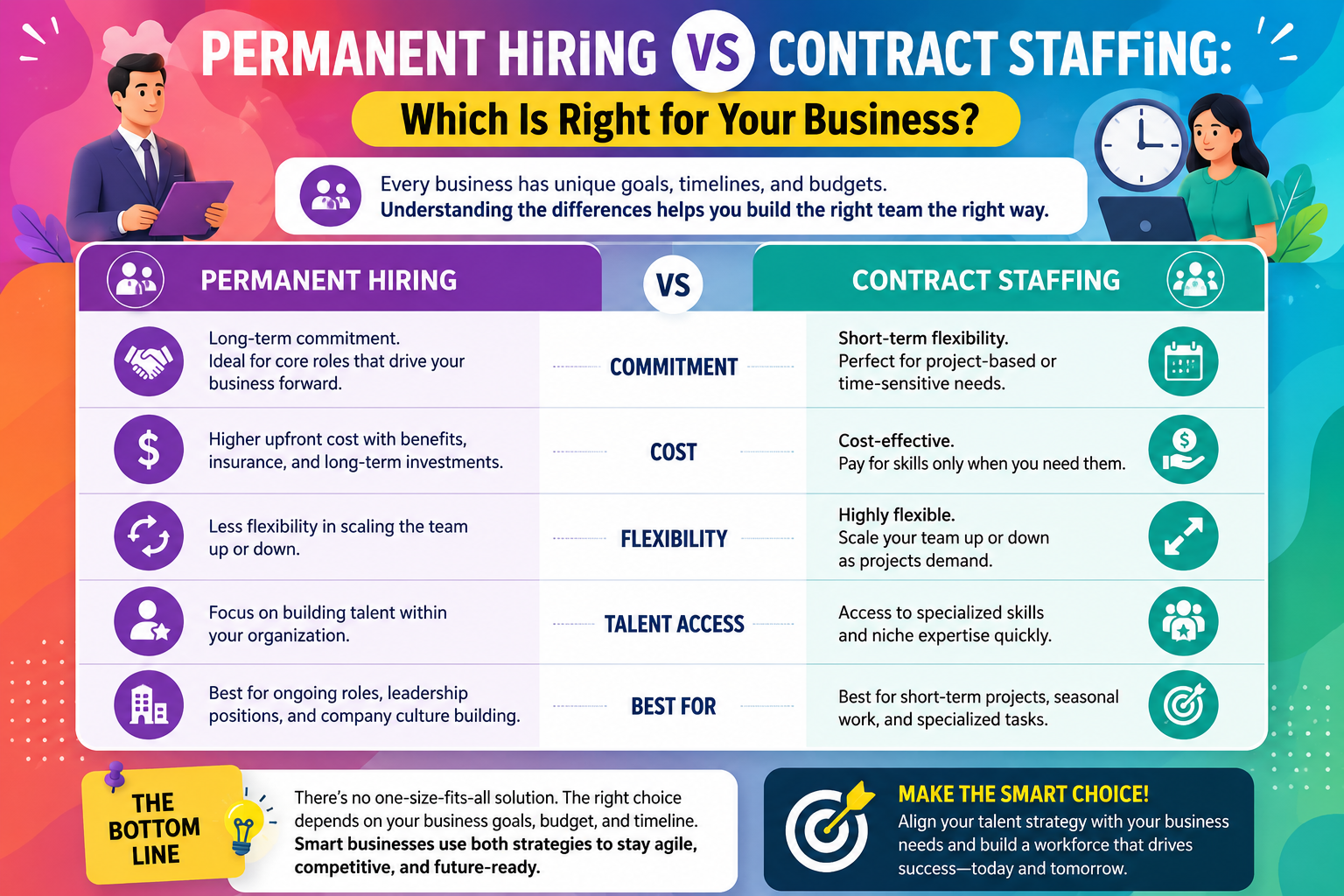
Key Differences Between Permanent Hiring and Contract Staffing
- Employment Duration: Permanent roles are long-term, while contract roles are project or time-based.
- Commitment Level: Permanent employees have ongoing commitments, while contractors work for defined periods.
- Cost Structure: Permanent hiring includes salaries, benefits, and long-term expenses.
- Flexibility: Contract staffing provides faster scaling and workforce flexibility.
- Recruitment Speed: Contract hiring is usually faster than permanent hiring.
- Employee Relationship: Permanent employees become part of company culture, while contractors focus on specific assignments.
- Risk Level: Contract staffing reduces long-term hiring risks.
Benefits of Permanent Hiring
- Builds long-term organizational knowledge.
- Improves employee loyalty and retention.
- Strengthens company culture.
- Supports leadership development.
- Creates stable teams.
- Improves long-term collaboration.
- Encourages employee growth and innovation.
- Provides better continuity for ongoing projects.
Benefits of Contract Staffing
- Faster access to skilled professionals.
- Reduced hiring timelines.
- Lower recruitment costs.
- Easy team expansion and reduction.
- Access to specialized expertise.
- Ideal for short-term projects.
- Reduced employee benefit costs.
- Supports seasonal workforce requirements.
- Helps manage urgent business needs.
Challenges of Permanent Hiring
- Long recruitment cycles.
- Higher hiring costs.
- Salary and benefit commitments.
- Difficulty scaling teams quickly.
- Risk of hiring the wrong candidate.
- Long-term workforce management responsibilities.
Challenges of Contract Staffing
- Limited employee attachment.
- Possible knowledge transfer challenges.
- Shorter engagement periods.
- Need for proper onboarding.
- Availability of skilled contractors may vary.
When Should You Choose Permanent Hiring?
Permanent hiring is the right choice when businesses need long-term team members who will contribute to company growth, culture, and strategic objectives.
- Building core internal teams.
- Leadership and management positions.
- Long-term business operations.
- Roles requiring deep company knowledge.
- Positions with continuous responsibilities.
- Growing organizations with stable workforce needs.
When Should You Choose Contract Staffing?
Contract staffing works best when companies need flexibility, specialized skills, or additional resources for temporary requirements.
- Short-term projects.
- Urgent hiring requirements.
- Technology upgrades.
- Software development projects.
- Seasonal workforce needs.
- Testing and quality assurance projects.
- Digital transformation initiatives.
- Temporary skill shortages.
How to Select the Right Hiring Model
- Analyze project duration and requirements.
- Evaluate budget and workforce goals.
- Identify whether skills are required permanently or temporarily.
- Consider business growth plans.
- Assess internal team capabilities.
- Determine the level of flexibility required.
- Review the importance of long-term cultural alignment.
Conclusion
Both permanent hiring and contract staffing provide valuable solutions depending on business requirements. Permanent hiring is ideal for organizations looking to build stable teams and long-term expertise, while contract staffing provides flexibility, speed, and access to specialized skills. The right choice depends on your goals, project requirements, budget, and workforce strategy.