Introduction
Hiring top talent has become increasingly competitive, and organizations that move too slowly often lose qualified candidates to faster competitors. While speeding up recruitment is important, rushing the hiring process can result in poor hiring decisions. The key is finding the right balance between speed and quality.
By optimizing recruitment workflows, leveraging technology, and improving communication, businesses can significantly reduce time-to-hire while ensuring they select the best candidates for every role.
What Is Time-to-Hire?
Time-to-hire measures the number of days between a candidate entering the recruitment process and accepting a job offer. It is one of the most important recruitment KPIs because it reflects the efficiency of your hiring process.
Why Reducing Time-to-Hire Matters
- Prevents losing top candidates to competitors.
- Reduces recruitment costs.
- Improves candidate experience.
- Increases recruiter productivity.
- Minimizes business disruptions caused by vacant positions.
- Accelerates project delivery and business growth.
Common Causes of Hiring Delays
- Unclear job descriptions.
- Lengthy approval processes.
- Too many interview rounds.
- Slow recruiter and hiring manager communication.
- Poor candidate screening methods.
- Limited talent pipelines.
- Manual recruitment processes.
- Delayed offer approvals.
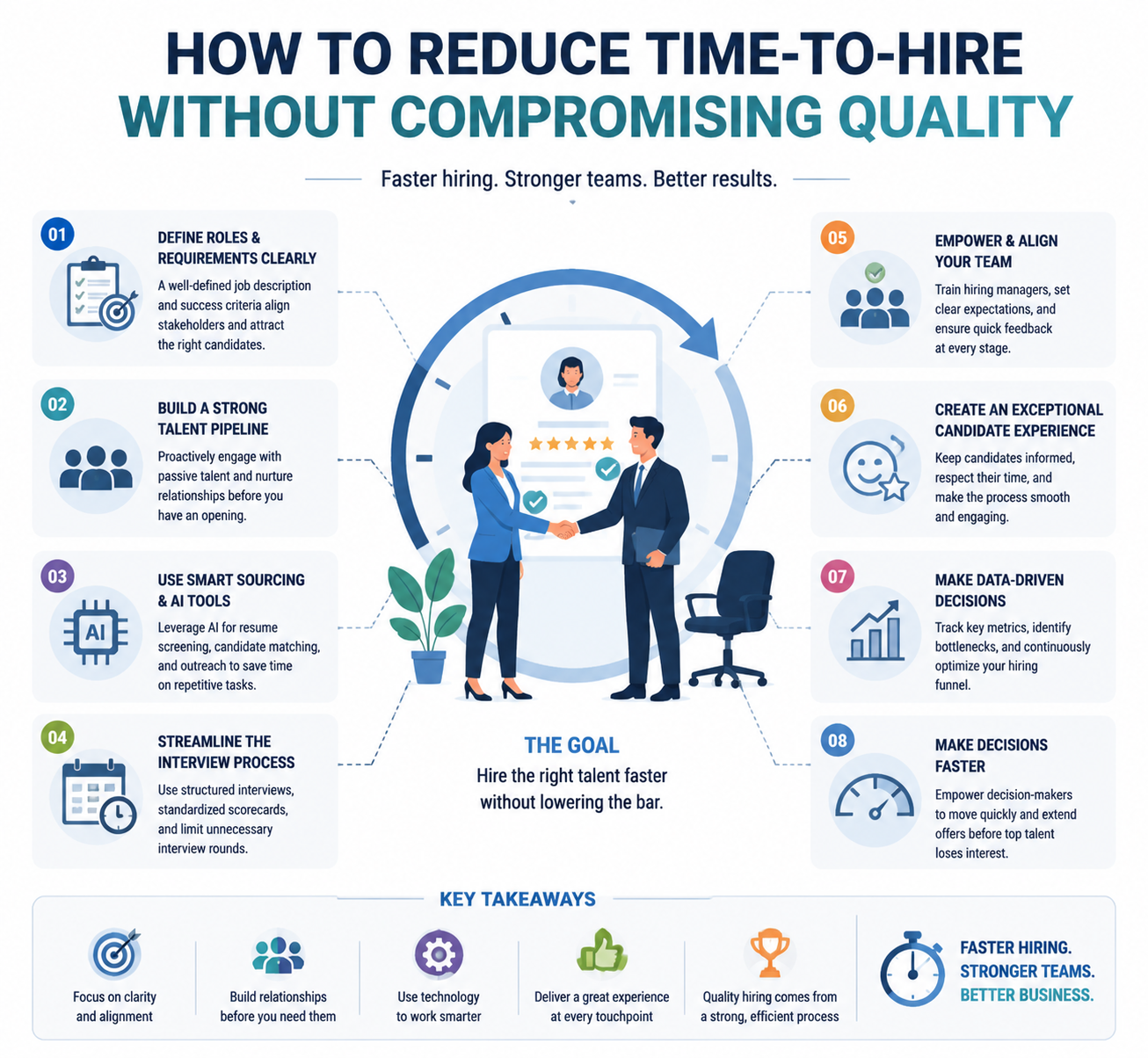
How to Reduce Time-to-Hire Without Compromising Quality
1. Create Clear Job Descriptions
Well-written job descriptions attract the right candidates from the beginning, reducing the number of unqualified applications and speeding up screening.
2. Build a Strong Talent Pipeline
Maintain relationships with potential candidates even before vacancies arise. A ready talent pool significantly shortens hiring timelines.
3. Use AI and Recruitment Software
Applicant Tracking Systems (ATS) and AI-powered recruitment tools automate resume screening, interview scheduling, and candidate communication, allowing recruiters to focus on qualified applicants.
4. Limit Interview Rounds
Multiple interview stages often delay hiring. Streamline the process by combining technical, behavioral, and managerial evaluations whenever possible.
5. Standardize Candidate Evaluation
Use structured interviews and standardized scorecards to make faster and more objective hiring decisions.
6. Improve Recruiter and Hiring Manager Collaboration
Regular communication between recruiters and hiring managers reduces approval delays and speeds up candidate selection.
7. Conduct Skills Assessments Early
Technical assessments, coding tests, or practical evaluations early in the hiring process help identify qualified candidates more efficiently.
8. Partner with Recruitment Agencies
Recruitment agencies maintain extensive talent networks and can quickly provide pre-screened candidates, reducing hiring timelines without sacrificing quality.
9. Offer Competitive Compensation
Competitive salary packages and attractive employee benefits improve offer acceptance rates and reduce negotiation delays.
10. Maintain Excellent Candidate Communication
Prompt updates, interview feedback, and transparent communication keep candidates engaged and reduce the risk of losing top talent.
Recruitment Metrics to Track
- Time-to-Hire
- Time-to-Fill
- Cost-per-Hire
- Offer Acceptance Rate
- Candidate Satisfaction
- Quality of Hire
- Source of Hire
- Interview-to-Offer Ratio
Common Mistakes to Avoid
- Rushing candidate evaluations.
- Ignoring cultural fit.
- Delaying interview feedback.
- Using outdated recruitment methods.
- Failing to build talent pipelines.
- Overcomplicating interview processes.
- Poor communication with candidates.
- Hiring based solely on resumes.
Conclusion
Reducing time-to-hire doesn't mean sacrificing hiring quality. By optimizing recruitment processes, embracing automation, improving communication, and building proactive talent pipelines, businesses can hire exceptional candidates faster while strengthening their employer brand and achieving long-term hiring success.