Introduction
Hiring skilled professionals has become increasingly challenging due to competitive talent markets, changing workforce expectations, and growing demand for specialized skills. Businesses need efficient recruitment strategies to attract and hire the right candidates faster.
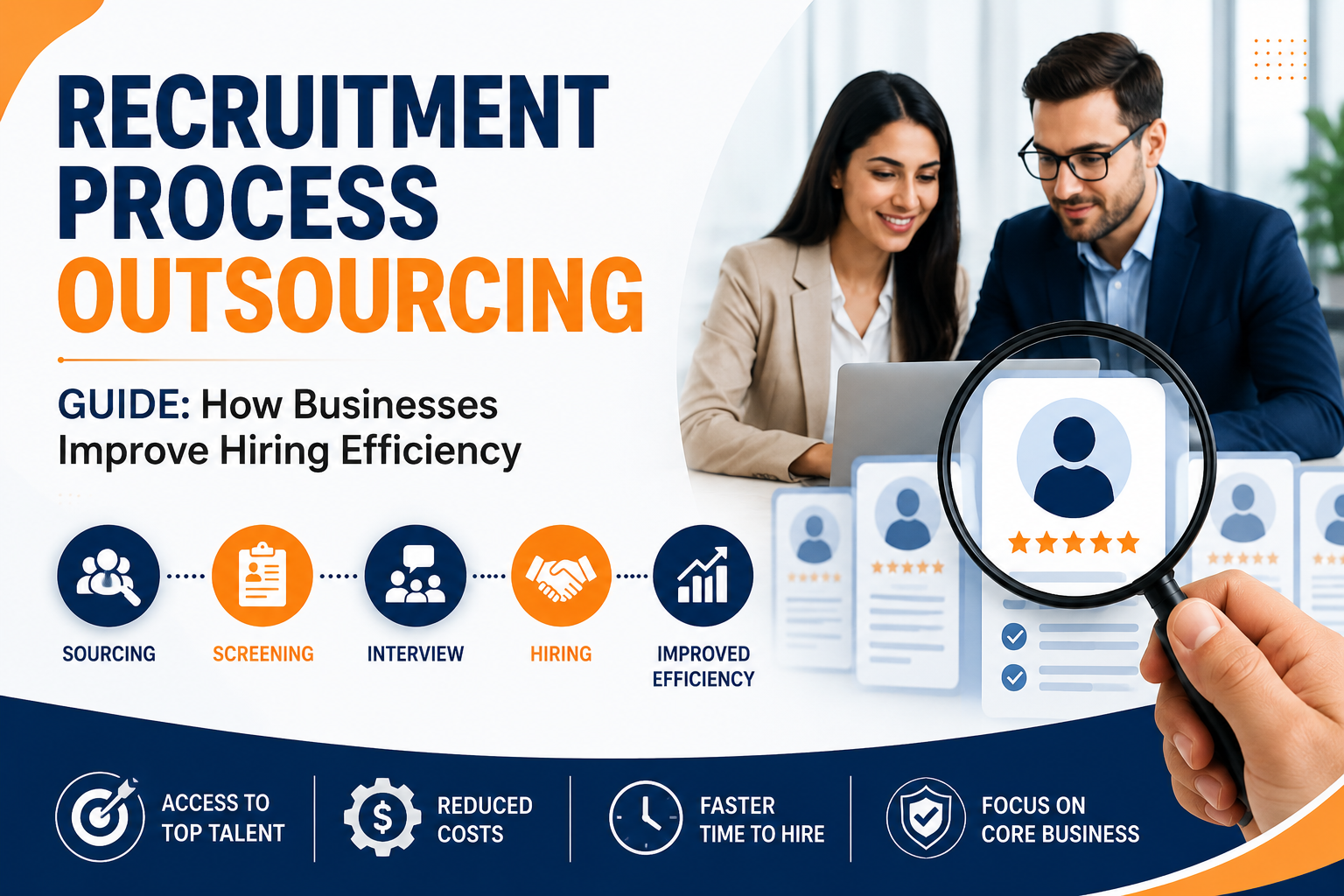
Recruitment Process Outsourcing (RPO) helps organizations improve their hiring process by allowing an external recruitment partner to manage some or all aspects of talent acquisition.
What Is Recruitment Process Outsourcing (RPO)?
Recruitment Process Outsourcing (RPO) is a recruitment model where a company transfers part or all of its hiring activities to an external recruitment provider. The RPO partner acts as an extension of the company's internal HR team and manages recruitment operations.
RPO providers help businesses improve candidate sourcing, screening, interviewing, hiring processes, and workforce planning while reducing recruitment complexity.
How Recruitment Process Outsourcing Works
- Analyze company hiring requirements.
- Understand job roles and skill requirements.
- Create recruitment strategy.
- Source qualified candidates.
- Screen and evaluate applicants.
- Coordinate interviews.
- Support offer management.
- Track recruitment performance.
Types of RPO Models
1. Full RPO
Full RPO involves outsourcing the complete recruitment process. The provider manages sourcing, screening, interviewing coordination, reporting, and recruitment operations.
2. Project-Based RPO
Project RPO is used when companies need to hire a large number of employees within a specific timeframe, such as during expansion or new product launches.
3. Selective RPO
Selective RPO allows businesses to outsource specific recruitment activities while keeping other hiring functions internal.
4. Recruiter On-Demand
Recruiter on-demand provides additional recruitment professionals when companies need temporary hiring support.
RPO vs Traditional Recruitment
- Recruitment Control: RPO provides strategic recruitment management, while traditional hiring is managed internally.
- Scalability: RPO can quickly increase recruitment capacity during high hiring periods.
- Technology: RPO providers often use advanced recruitment tools and analytics.
- Cost: RPO reduces long-term recruitment expenses.
- Expertise: RPO provides access to specialized recruitment professionals.
Benefits of Recruitment Process Outsourcing
- Faster hiring process.
- Reduced recruitment costs.
- Access to larger talent pools.
- Improved candidate quality.
- Better employer branding.
- Advanced recruitment technology.
- Scalable hiring support.
- Improved recruitment analytics.
Why Companies Choose RPO Services
- To handle large hiring volumes.
- To reduce time-to-hire.
- To improve recruitment efficiency.
- To overcome talent shortages.
- To access recruitment expertise.
- To improve candidate experience.
- To focus internal teams on strategic HR activities.
Recruitment Processes Covered by RPO
- Workforce planning.
- Job description development.
- Candidate sourcing.
- Resume screening.
- Technical assessments.
- Interview scheduling.
- Candidate communication.
- Offer management.
- Recruitment reporting.
Industries Using RPO Solutions
- Information Technology
- Healthcare
- Finance
- Manufacturing
- E-commerce
- Education
- Startups
- Enterprise organizations
Challenges of Recruitment Process Outsourcing
- Selecting the right RPO partner.
- Maintaining company culture alignment.
- Communication challenges.
- Managing recruitment expectations.
- Ensuring data security.
- Maintaining candidate experience.
How to Choose the Right RPO Partner
- Evaluate recruitment industry experience.
- Check hiring success records.
- Review recruitment technology capabilities.
- Understand service models.
- Assess communication processes.
- Check scalability options.
- Review client testimonials.
Future Trends in RPO Recruitment
- AI-powered candidate sourcing.
- Data-driven recruitment decisions.
- Automation of hiring workflows.
- Remote recruitment models.
- Improved candidate experience.
- Skills-based hiring approaches.
- Global talent acquisition.
Conclusion
Recruitment Process Outsourcing helps businesses create efficient, scalable, and cost-effective hiring processes. By partnering with experienced RPO providers, organizations can access better talent, reduce recruitment challenges, and focus on their core business objectives.