Introduction
Businesses often experience periods of increased demand due to new projects, product launches, seasonal growth, market changes, or technology upgrades. During these peak workloads, existing teams may struggle to manage increased responsibilities while maintaining quality and deadlines.
Scaling teams quickly and efficiently allows organizations to handle additional workloads without affecting productivity. Flexible workforce models such as staff augmentation and resource augmentation help companies access skilled professionals when they need additional support.
Why Businesses Need Team Scaling
- Manage sudden increases in project requirements.
- Meet strict delivery deadlines.
- Support business growth.
- Access specialized skills quickly.
- Avoid overloading internal teams.
- Improve project efficiency.
- Handle seasonal demand fluctuations.
- Accelerate product development.
Challenges During Peak Workloads
- Limited internal resources.
- Employee burnout and reduced productivity.
- Difficulty finding skilled professionals quickly.
- Project delays.
- Increased operational pressure.
- Higher recruitment costs.
- Difficulty maintaining quality standards.
What Is Team Scaling?
Team scaling is the process of increasing or adjusting workforce capacity based on business requirements. It allows companies to add new professionals, expand project teams, or access specialized expertise without permanently increasing operational costs.
Effective team scaling focuses on adding the right skills at the right time while maintaining collaboration, productivity, and project quality.
Effective Strategies to Scale Teams
1. Identify Resource Requirements Early
Businesses should analyze upcoming workloads, project timelines, and skill requirements in advance. Early planning helps organizations avoid last-minute hiring challenges.
2. Use Flexible Hiring Models
Flexible hiring approaches allow companies to quickly increase team capacity without long-term commitments.
- Staff augmentation
- Resource augmentation
- Dedicated development teams
- Contract staffing
- Remote hiring
3. Hire Specialized Professionals
Instead of hiring general resources, businesses should add professionals with specific skills required for project success.
- Software developers
- Cloud engineers
- DevOps specialists
- QA engineers
- AI and Machine Learning experts
- UI/UX designers
4. Build Remote and Distributed Teams
Remote teams provide access to global talent pools and allow companies to scale faster without geographical limitations.
Using Staff Augmentation for Team Scaling
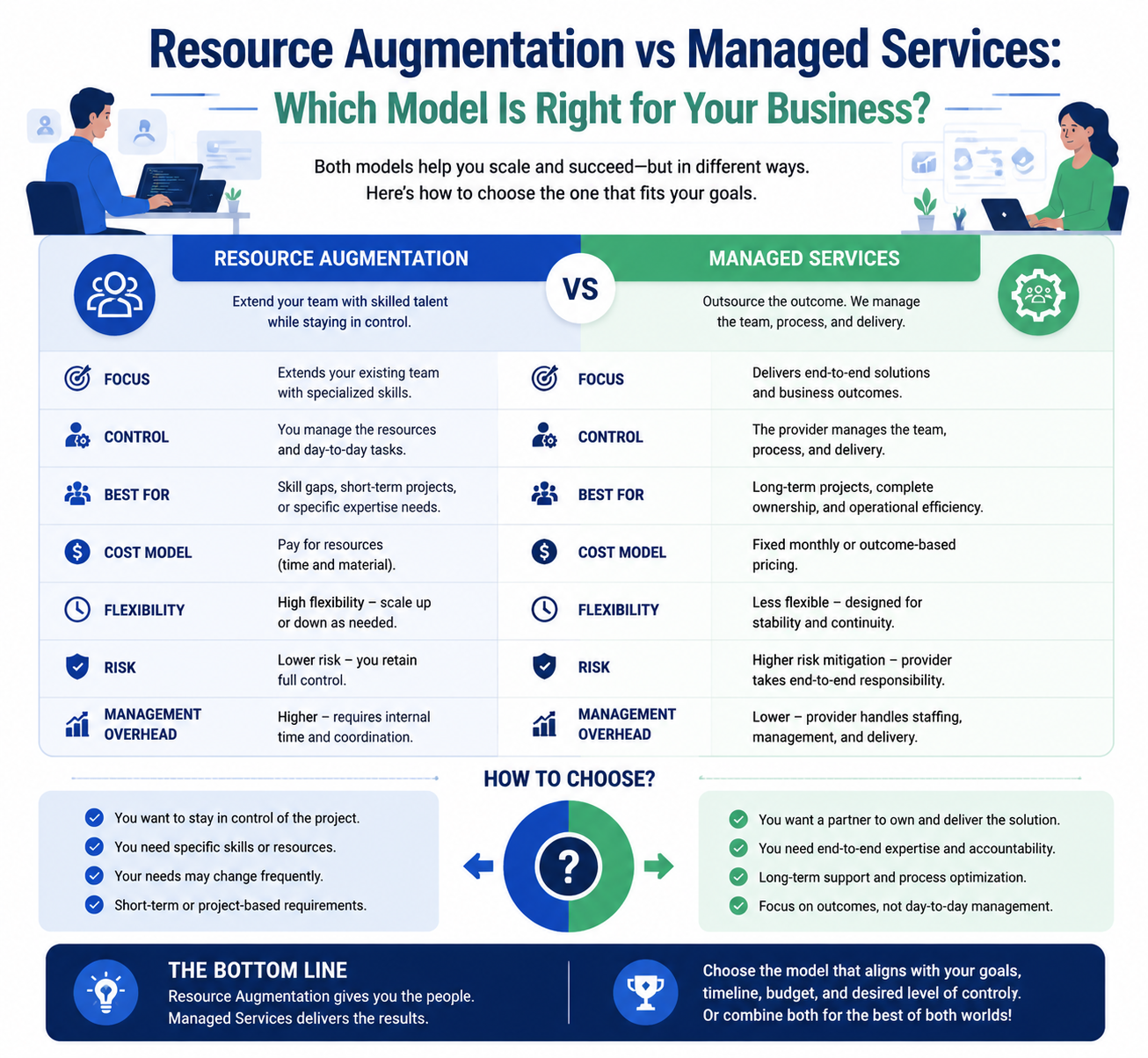
Staff augmentation is one of the most effective ways to scale teams during peak workloads. It allows businesses to add experienced professionals who work alongside internal teams and follow existing processes.
- Quick access to skilled resources.
- Reduced hiring timelines.
- Lower recruitment costs.
- Flexible team expansion.
- Better workload management.
- Access to specialized expertise.
- Easy scaling after project completion.
Benefits of Flexible Team Scaling
- Faster project delivery.
- Improved productivity.
- Reduced employee burnout.
- Better resource utilization.
- Lower operational costs.
- Ability to respond to market changes.
- Improved business agility.
- Access to global professionals.
How to Manage Expanded Teams
- Define clear roles and responsibilities.
- Use collaboration and project management tools.
- Maintain regular communication.
- Set measurable goals.
- Create proper onboarding processes.
- Encourage team collaboration.
- Track performance regularly.
- Provide necessary documentation.
Common Mistakes to Avoid
- Scaling without proper planning.
- Hiring resources without evaluating skills.
- Ignoring communication processes.
- Not defining project expectations.
- Overlooking team culture.
- Failing to manage workload distribution.
Best Practices for Scaling Successfully
- Forecast future workload requirements.
- Maintain a talent pipeline.
- Partner with reliable staffing providers.
- Choose resources based on skills and experience.
- Create scalable processes.
- Use technology for collaboration.
- Continuously evaluate team performance.
Conclusion
Scaling teams during peak workloads requires a strategic approach to workforce planning. Businesses that use flexible hiring models such as staff augmentation and resource augmentation can quickly access skilled professionals, maintain productivity, and deliver projects successfully. With proper planning, communication, and resource management, organizations can handle growth challenges effectively.